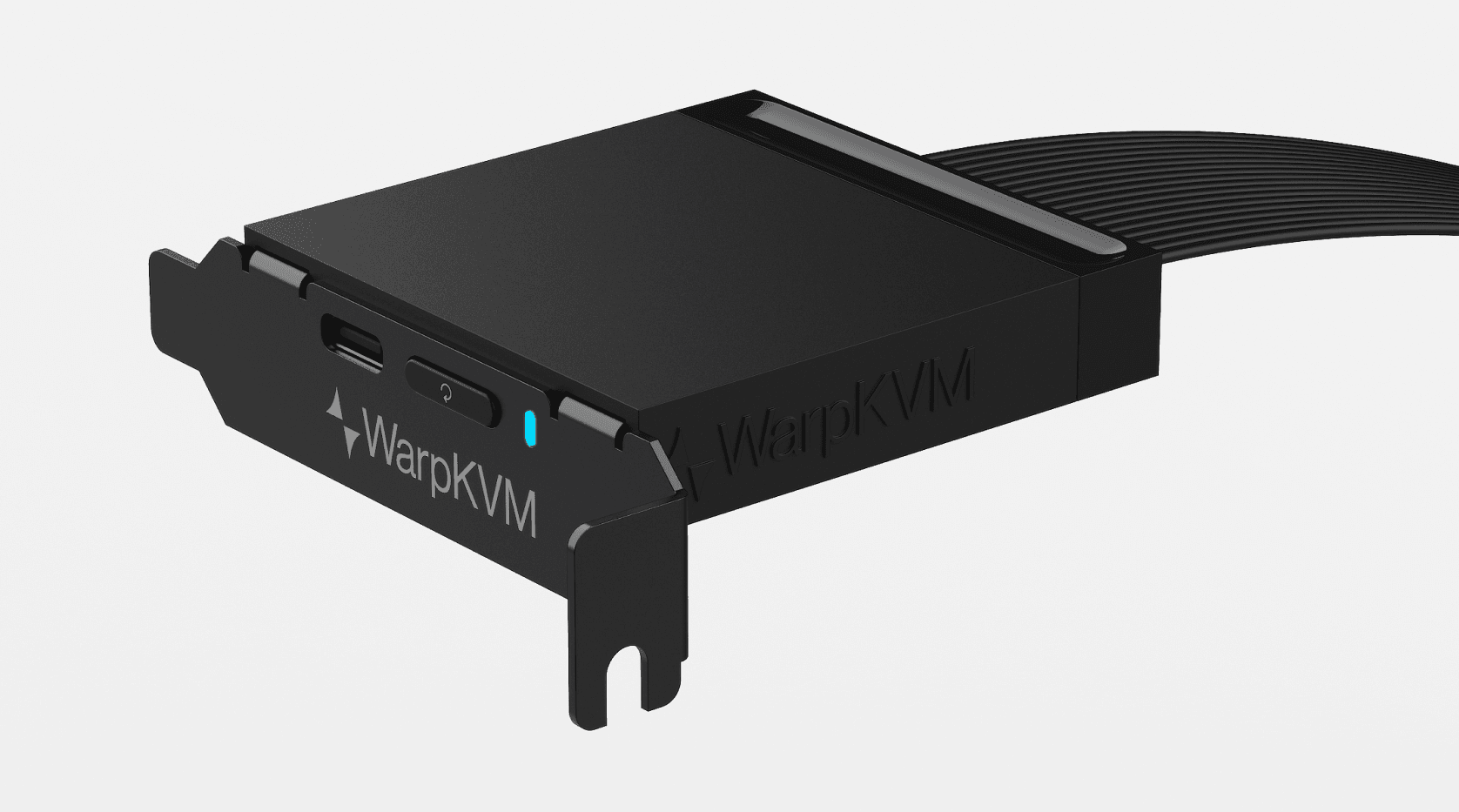
An inline KVM that sits between your computer and monitor as transparent passthrough, and is also the remote front door to every machine you own.
WarpKVM started from our own work. Every hardware project we ran needed a remote KVM to reach machines we could not easily walk up to, and the existing options did not fit the middle of the market. JetKVM owns the entry tier. PiKVM holds the mid tier. Above that, the jump straight to four-figure enterprise gear felt wrong. WarpKVM is the missing pro-sumer KVM: 4K passthrough, low latency, properly engineered, and built to live on a desk or in a small rack. The buyer is the person already running a NAS, a mini-rack, or a homelab who wants serious remote access to the machines they own. We started prototyping in 2025.
Why it's different
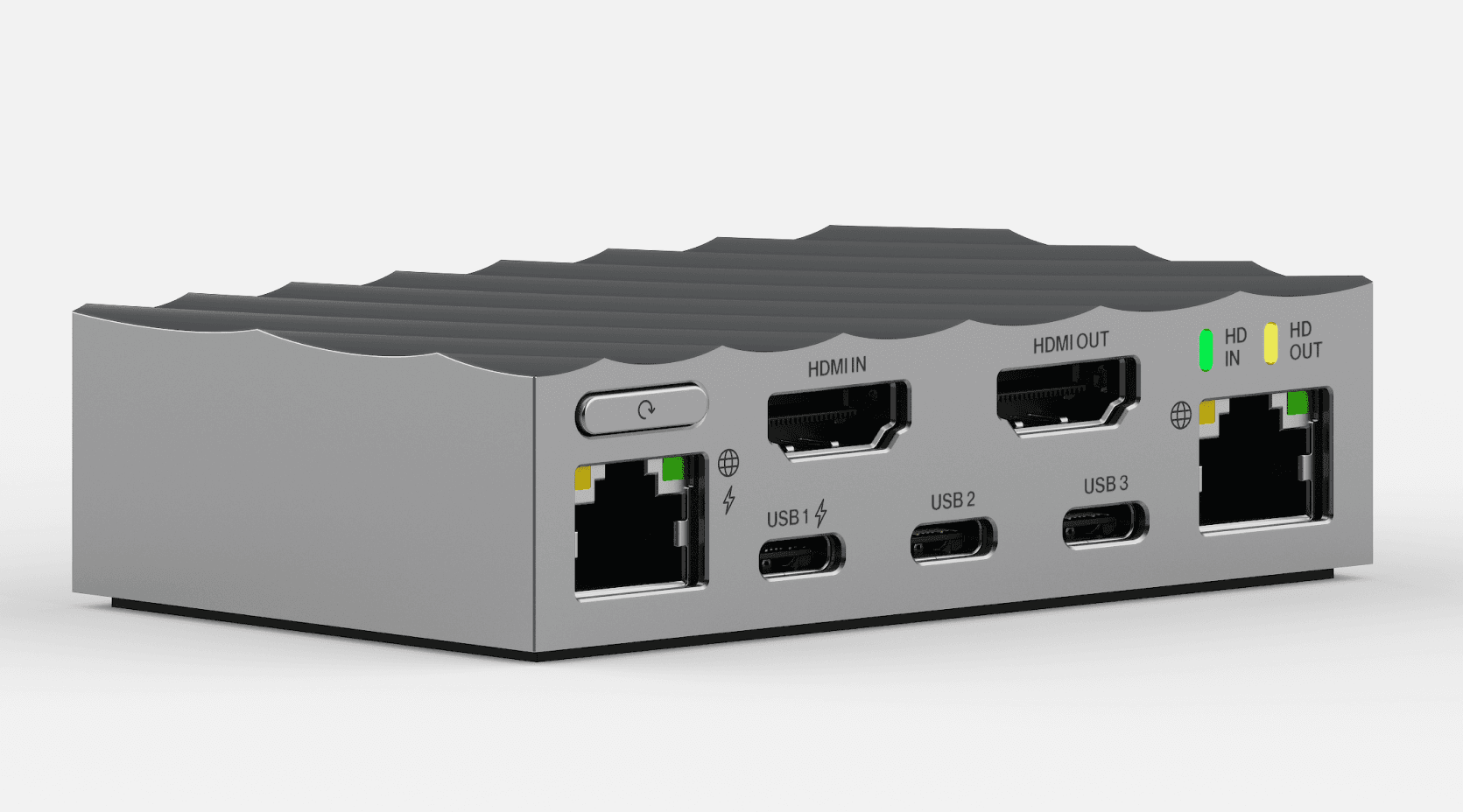
- 4K at 60 fps capture and passthrough, with an end-to-end latency target of 15-30 ms (the user's network, not the device, is the dominant variable)
- Direct HDMI to CSI capture, no USB capture stick in the path
- HDMI output that also makes it a lightweight PC, media player, or game streamer
- Dual gigabit ethernet, daisy-chainable between machines and other WarpKVMs
- Tailscale built in for reaching it from anywhere
- USB-C ATX control and USB-C expansion for accessories
- No screen on the device; a mobile companion app over BLE handles power on/off and remote connect
- Browser-based multi-machine control: switch between KVMs from one tab
- Modular accessories that ride a USB-C expansion bus: power switching, remote boot, LTE fallback, security keys, sensors, and more
Hard parts
Three problems took the most engineering time.
The first was latency. For a remote KVM to actually replace sitting at a machine, the round-trip from a keyboard press to the response on screen has to feel local. Standard internet protocols add tens to hundreds of milliseconds. We set a target of 15-30 ms end-to-end, low enough that the user's network would be the dominant variable rather than the device. Solving that without sacrificing video quality was the hardest part of the firmware and networking work.
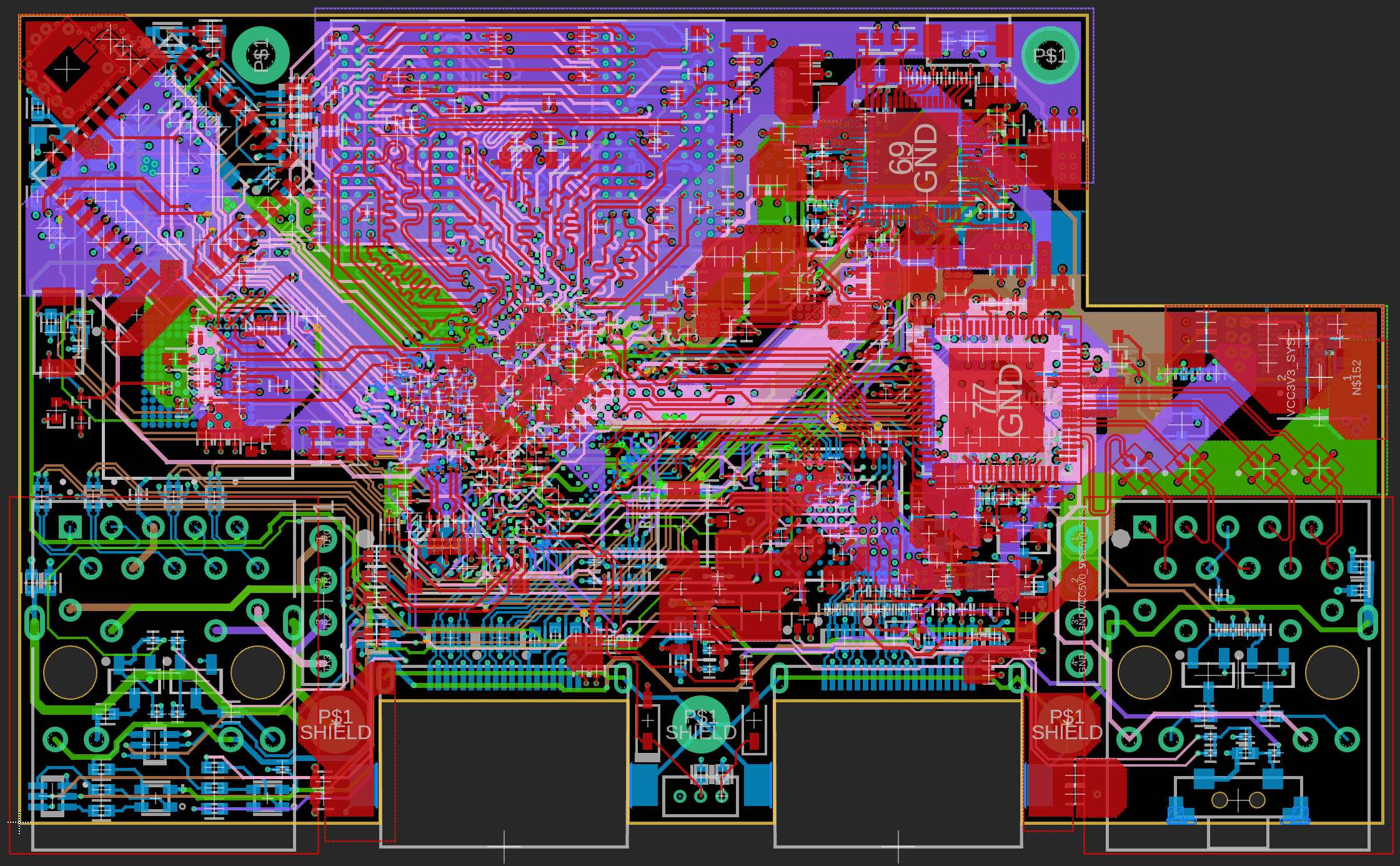
The second was the capture path. Most KVMs put a USB capture stick somewhere between HDMI in and the host processor. That adds compression, delay, and a failure point. WarpKVM does direct HDMI to CSI capture, no USB hop, which keeps the signal clean but tightened every part of the electrical and PCB design.
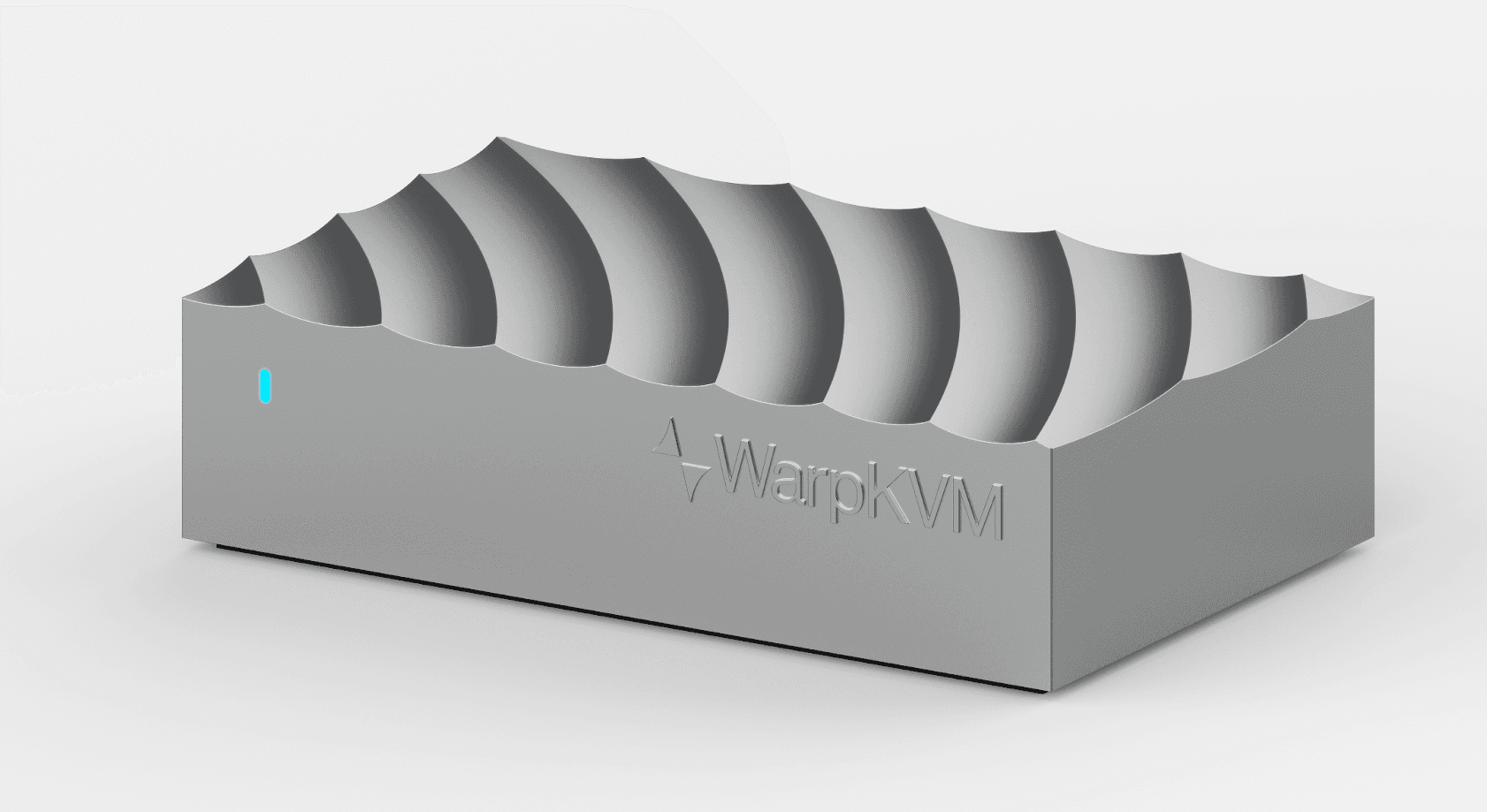
The third was making it not look like a server appliance. Most KVMs are either ugly utility boxes or polished-but-cheap plastic. Industrial designer Anson Cheung, previously a partner at Bould Design (Nest, Roku, GoPro), owned the entire exterior. We worked alongside him to make sure every feature landed and the main PCB fit inside the shape he wanted. That constraint pushed every other engineering choice: thermal, layout, port placement, materials.
By the numbers
- Video
- 4K @ 60 fps capture and passthrough, HDMI direct to CSI
- Network
- Dual gigabit ethernet (daisy-chainable), Tailscale built in
- Latency target
- 15-30 ms end-to-end
- Power & expansion
- USB-C
- ATX control
- USB-C or BLE
- Companion app
- Mobile (BLE) for power on/off and remote connect
- Status
- PCB prototypes ordered; pre-orders by end of 2026
What's next
PCB prototypes are heading to the assembly shop. After bring-up and validation, we travel to China to work alongside our manufacturing partners on production tooling. Pre-orders open by end of 2026 at warpkvm.com.